

Nestled between Rostock and Greifswald in Germany, Christian Rohlfing is proving that large-scale agriculture can work in harmony with nature. The 1,950-hectare Gut Bad Sülze estate combines generations of farming tradition with forward-thinking practices to protect land, water and climate. Managed by Christian Rohlfing and his family, the estate has become a model for sustainable farming in the Baltic Sea region, earning Christian the title of WWF Baltic Sea Farmer of the Year 2025.
A Family Legacy with a Forward-Thinking Twist
Farming runs deep in the Rohlfing family, with roots stretching back at least seven generations. In 1995, Christian and his wife moved to Western Pomerania and took over a small farm. “I always knew I wanted to continue my parents’ work,” he says. “Farming is the most beautiful profession on earth.” Over time, the farm grew – and in 2015, they took a bold step by acquiring the Bad Sülze estate. Today, they manage two distinct operations: an organic grassland farm and a conventional arable farm – each tailored to the unique needs of the land.
Closing the Loop on Nutrients
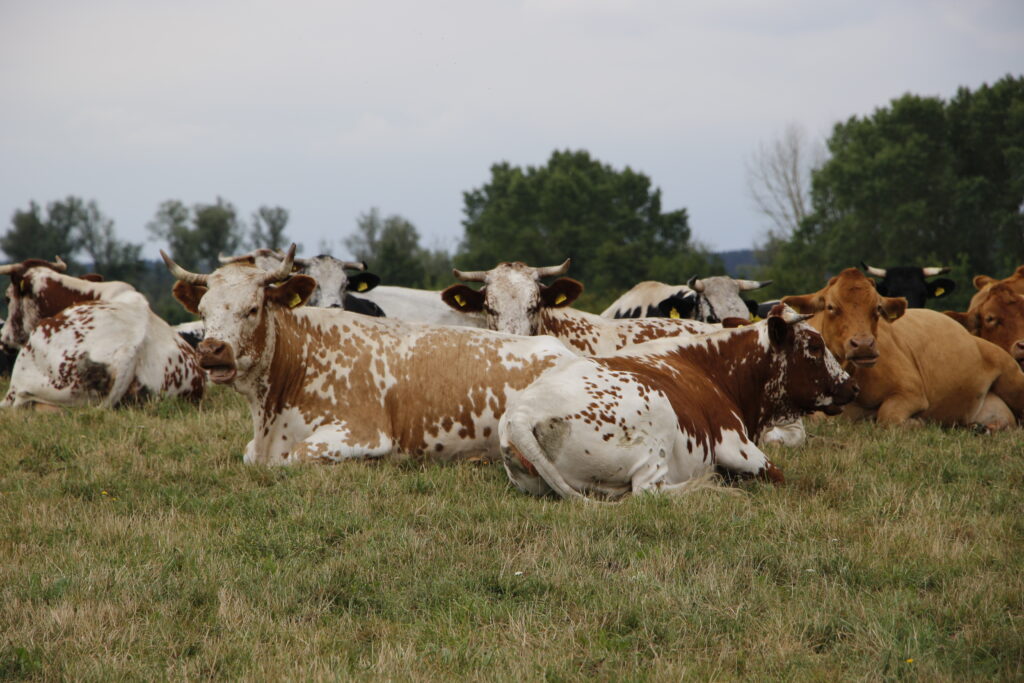
Gut Bad Sülze is guided by a strong commitment to circular nutrient management. Cattle are fed exclusively with homegrown feed, and arable land is fertilized using the farm’s own solid manure and compost. This approach minimizes nutrient loss and protects nearby water bodies from runoff.
Precision farming tools – like satellite imagery and yield maps – help fine-tune nutrient inputs, while a diverse crop rotation that includes over 70 hectares of peas further boosts soil fertility naturally.
Christian is deeply invested in soil health. The farm participates in carbon farming and humus-building initiatives, and composting is central to maintaining long-term fertility. “Soil is our capital,” he says. “We have to protect it if we want to farm into the future.”
The farm also manages 800 hectares of wet fenland grassland, a rare and valuable ecosystem. By carefully timing water levels and avoiding fertilization, the Rohlfing’s not only help to prevent CO₂ emissions and create habitats for native species, but the measure is also effective against the frequency dry periods in the area.
Innovation Meets Community
Christian’s efforts extend beyond the fields. He’s a board member of the North Western Pomerania Farmers’ Association and a vocal advocate for sustainable agriculture. Whether through school visits, social media, or public speaking, he’s passionate about reconnecting people with farming.
The farm also operates a 240 kWp solar power system and is planning a biogas plant in partnership with the local hospital and municipality – an ambitious project that would use wood from the planned agroforestry system to generate heat and electricity for the community.
A Well-Deserved Recognition
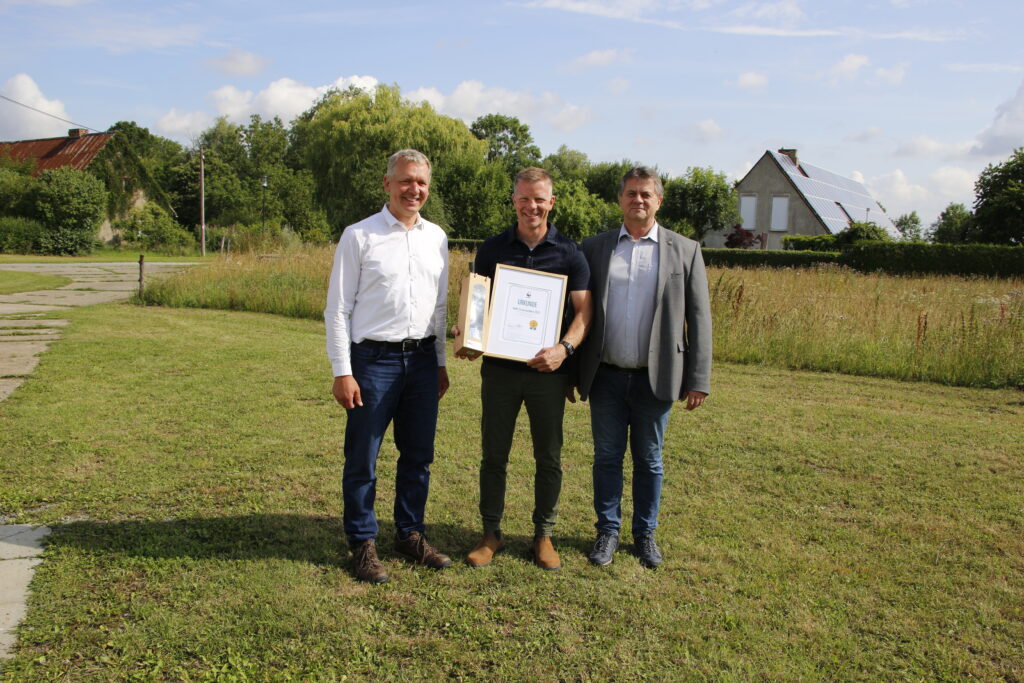
For Christian, the WWF award is more than a personal honor – it’s a validation of years of hard work and a signal to keep pushing boundaries. “It’s a great recognition and a sign that we’re on the right path,” he says. “It motivates us to keep exploring new ideas, even if they’re off the beaten track.”
As climate change continues to reshape the agricultural landscape, Christian believes that flexibility, innovation, and collaboration will be key. “The challenges are big, but so are the opportunities,” he says. “We just need the right support – from policymakers, retailers, and the entire food industry.”
FARM FACTS
Location: Gut Bad Sülze estate, Bad Sülze, Germany
Type of Farm: Crop and organic cattle farm (1967 ha)
Main production: Rapeseed, wheat, barley, rye, grain, oats, peas and organic beef
Key practices: Maintain year-round plant cover, Protect soil structure from compaction, Use catch crops or intercrops, Add organic matter to the soil, Maintain buffer zones along waterbodies, Practice water management, Use nutrient balance and practice balanced fertilization, Apply fertilizers at the correct time and right conditions, Use careful manure application techniques, Use manure in plant production, Practice precision farming equipment or techniques.
Jury Motivation: "Christian Rohlfing is an enthusiastic farmer who is constructively tackling the many challenges of the future. The farm, Gut Bad Sülze, is in a constant state of change and new paths are being taken beyond what has been successful so far. Christian shows very clearly that the farm sees itself as part of an ecosystem whose services it knows how to use and whose capital it must protect. As a farmer who likes to be in contact with media and people, Christian Rohlfing is an excellent multiplier for nature-oriented, innovative approaches, which ultimately also benefit the protection of the Baltic Sea." (Read more)

OPINION
Christian Rohlfing on the future of farming
Q: What inspired you to adopt more sustainable practices?
A: As a large farm, I naturally feel a great responsibility for the landscape and nature in which we live and work. We want to hand over a viable business in a healthy ecological environment to our children. The strong focus on a closed nutrient cycle and soil fertility is an integral part of farm management intended to contribute to the future of our three children.
Q: What challenges have you faced in implementing new methods?
A: It takes courage to break new ground. Mowing wet grassland was a learning curve, and many measures still lack proper incentives. Our planned agroforestry system – where we aim to use rows of trees to combat wind erosion – faces resistance due to bird habitat concerns, even though it could also benefit biodiversity. There are sometimes, like in this case, conflicting objectives.
Q: What impact has your work had on the community?
A: I get to talk to many people through my role in the farmers’ association and media appearances. I want to give farming more recognition and welcome anyone interested to visit the farm.